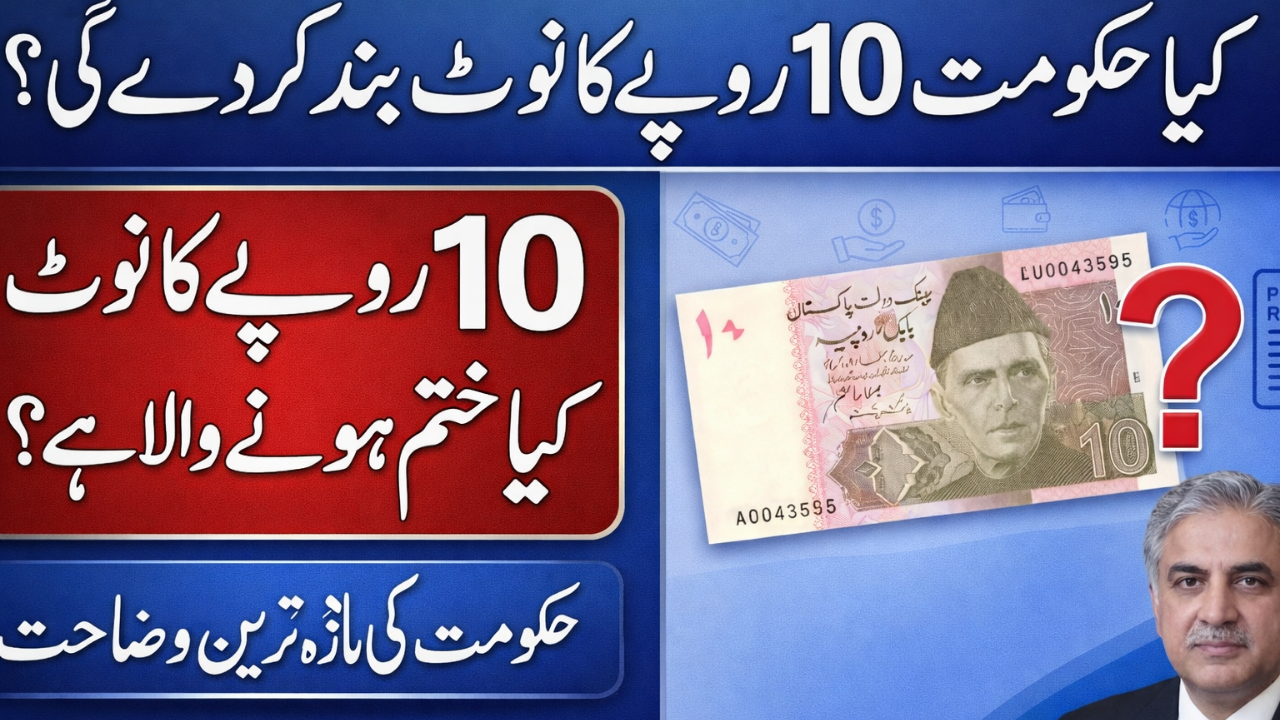
The possibility of the Rs. 10 Note Discontinued in Pakistan has sparked nationwide discussion, especially among daily wage earners, traders, and transport users. With rising printing costs and durability concerns, the federal government is actively reviewing whether continuing the Rs. 10 banknote still makes economic sense or if replacing it with a coin would be a smarter alternative.

Based on official developments and policy discussions, here’s a clear, factual, and easy-to-understand breakdown of what’s really happening — and what it could mean for the public.
Why Is the Rs. 10 Note Discontinued Debate Happening?
The discussion around the Rs. 10 Note Discontinued issue emerged after the Federal Cabinet of Pakistan formed a special committee to examine the future of the Rs. 10 banknote.
The committee was established to evaluate whether:

- The note should be withdrawn or retained
- Its printing and circulation costs are justified
- A Rs. 10 coin would be more cost-effective in the long run
This move reflects a broader effort to streamline currency management and reduce unnecessary public expenditure.
Who Is Leading the Review Committee?
The committee reviewing the Rs. 10 Note Discontinued proposal is headed by the Finance Minister of Pakistan, highlighting the seriousness of the issue.
The panel includes senior officials responsible for:

- Fiscal policy
- Currency production
- Cost-benefit analysis
Their role is to present data-driven recommendations to help the cabinet make a final decision.
Rising Printing Costs: A Key Concern
One of the strongest arguments supporting the Rs. 10 Note Discontinued discussion is the high production cost of low-denomination banknotes.
Why printing the Rs. 10 note is expensive:
- Frequent wear and tear
- Short lifespan compared to coins
- Repeated reprinting increases government spending
From my own experience handling cash daily, Rs. 10 notes often appear torn, faded, or taped together — proving they simply don’t last long in circulation.

Rs. 10 Note vs Rs. 10 Coin: Which Is Better?
Durability Comparison
- Banknote lifespan: Months
- Coin lifespan: Several years
Cost Efficiency
- Coins cost more upfront
- But save money long-term due to durability
This is why policymakers believe replacing the note could reduce recurring costs — a central factor in the Rs. 10 Note Discontinued debate.
Will the Rs. 10 Note Be Withdrawn Immediately?
No. Even if the Rs. 10 Note Discontinued decision is approved, it would not happen overnight.
Expected transition process:
- Cabinet reviews committee report
- Official notification issued
- Gradual phase-out of banknotes
- Parallel circulation with coins
This phased approach ensures that the public and businesses have ample time to adapt.

Public Impact of Rs. 10 Note Discontinued
If implemented, the decision could affect:
- Public transport fares
- Small retail transactions
- Daily wage payments
However, similar transitions have occurred before without major disruption. Coins often become normalized once circulation stabilizes.
What Happens Next?
After completing its analysis, the committee will submit a detailed report to the Government of Pakistan.

The federal cabinet will then:
- Review economic implications
- Consider public convenience
- Make the final call on the Rs. 10 Note Discontinued policy
As of now, no final decision has been announced.
Conclusion
The Rs. 10 Note Discontinued discussion reflects a broader effort to modernize Pakistan’s currency system. While emotional attachment to paper notes exists, economic efficiency and durability increasingly favor coins.
Until an official announcement is made, the Rs. 10 note remains legal tender. Staying informed through verified updates is the best way to prepare for any potential change.