
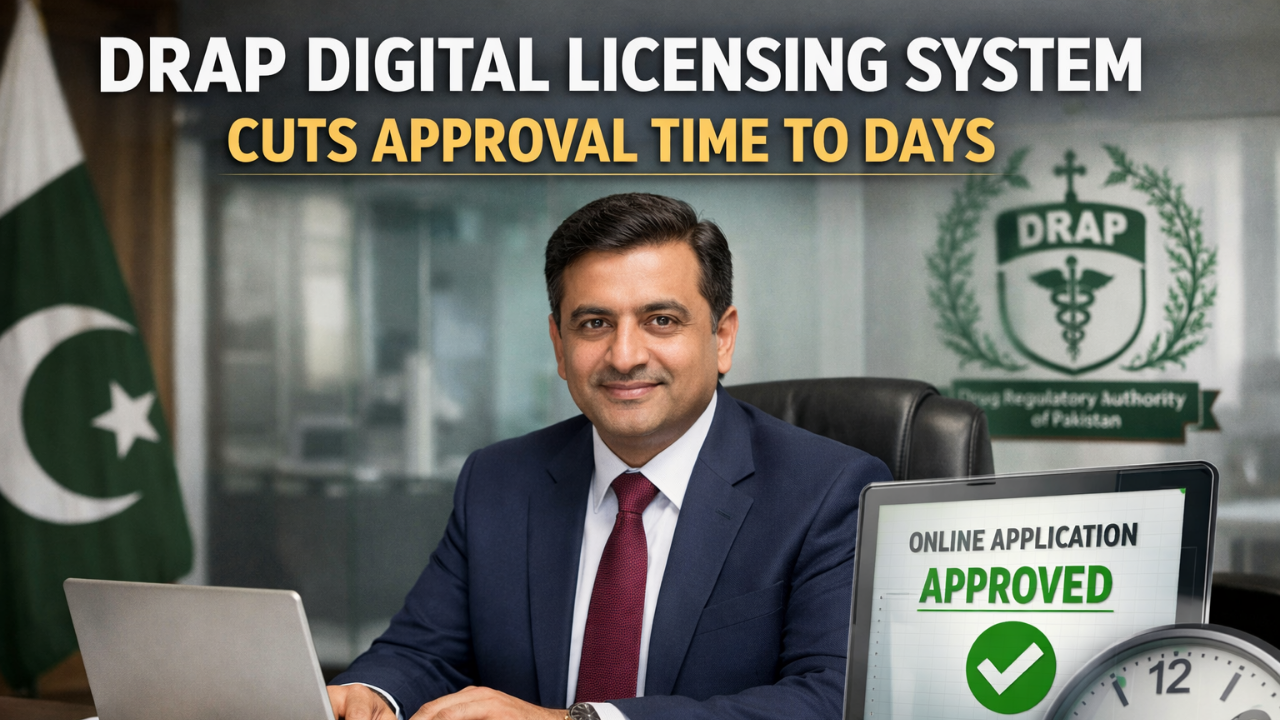
The DRAP digital licensing system has completely transformed how regulatory approvals are handled in Pakistan’s healthcare sector. What once took years is now being completed in a matter of days, marking one of the most impactful regulatory reforms in recent history. This shift not only improves efficiency but also strengthens access to quality medicines for millions of people across the country.

From faster approvals to transparent workflows, the digital transformation led by the Drug Regulatory Authority of Pakistan is reshaping the future of pharmaceutical regulation in Pakistan.
What Is the DRAP Digital Licensing System?
The DRAP digital licensing system is an end-to-end online platform designed to modernize licensing, registration, and approval processes for medicines, vaccines, and healthcare products.
Key Objectives of the Digital System
- Eliminate manual paperwork
- Reduce approval delays
- Improve transparency and accountability
- Ensure timely availability of essential medicines
Previously, stakeholders faced long queues, unclear timelines, and inconsistent communication. The new digital framework addresses all these challenges at once.
How the DRAP Digital Licensing System Reduced Approval Time
According to DRAP’s leadership, internal reforms combined with digital tools have resulted in a dramatic reduction in processing timelines.

From Years to Days
Under the old system, licensing approvals could take several years. With the DRAP digital licensing system, those same processes are now completed within days, depending on application completeness.
This improvement is largely due to:
- Automated workflows
- Real-time tracking
- Centralized documentation
- Faster inter-departmental coordination
Leadership Behind the Digital Transformation
The reform initiative has been spearheaded by DRAP’s Chief Executive Officer, Dr Ubaidullah, who emphasized that internal restructuring and digitalization were the foundation of this progress.
Commitment to Regulatory Excellence
Under his leadership, DRAP has focused on:

- Removing legacy bottlenecks
- Streamlining approval pathways
- Enhancing service delivery standards
These reforms reflect a broader vision to make Pakistan’s drug regulatory system comparable with global best practices.
Role of Government Support in DRAP’s Progress
The success of the DRAP digital licensing system did not happen in isolation. Strong backing from the federal government played a critical role in enabling reforms.
Why Government Support Matters
- Faster policy approvals
- Budgetary and technical backing
- Alignment with national healthcare goals
This collaboration allowed DRAP to move beyond incremental change and implement a system-wide digital overhaul.
Impact on Medicine Availability in Pakistan
One of the most significant benefits of the DRAP digital licensing system is improved access to essential medicines.

Stronger Supply Chain Outcomes
- Faster market entry of approved drugs
- Reduced shortages
- Predictable approval timelines for manufacturers
By addressing long-standing delays, DRAP has strengthened its ability to ensure that life-saving medicines reach patients on time.
Improved Transparency and Accountability
Digitalization has also introduced greater transparency into the licensing process.
How Transparency Has Improved
- Online application tracking
- Clear status updates
- Reduced discretionary delays
- Better compliance monitoring
This has increased trust among pharmaceutical companies, healthcare providers, and the general public.
DRAP Digital Licensing System and Vaccine Regulation
Beyond medicines, the DRAP digital licensing system is playing a vital role in improving vaccine regulation and availability.

Progress in Vaccine Quality
DRAP has reported notable improvements in:
- Vaccine component quality
- Regulatory oversight
- Approval efficiency
These changes are critical for strengthening Pakistan’s immunization programs.
Local Vaccine Manufacturing: A Strategic Goal
The digital reforms align with Pakistan’s long-term goal of achieving self-reliance in vaccine production.
International and Provincial Partnerships
With support from:

- Provincial governments
- International partners
Pakistan is steadily moving toward developing local vaccine manufacturing capacity.
Why Local Manufacturing Matters
- Stabilized supply chains
- Reduced dependency on imports
- Faster response during health emergencies
The DRAP digital licensing system is a foundational pillar in enabling this transition.
How the Digital System Benefits Stakeholders
For Pharmaceutical Companies
- Faster approvals
- Lower compliance friction
- Predictable timelines
For Healthcare Providers
- Timely availability of medicines
- Improved regulatory confidence
For the Public
- Better access to quality healthcare products
- Reduced medicine shortages
Challenges and Continuous Improvement
While the DRAP digital licensing system marks a major achievement, DRAP acknowledges that continuous improvement is essential.
Areas of Ongoing Focus
- Further automation
- User experience optimization
- Capacity building within DRAP
This commitment ensures the system evolves with industry needs and technological advancements.
Why the DRAP Digital Licensing System Is a Landmark Reform
The transformation is not just technical—it represents a cultural shift toward efficiency, accountability, and public service excellence.
Key Takeaways
- Approval timelines reduced from years to days
- Improved medicine and vaccine availability
- Stronger regulatory performance
- Increased healthcare self-reliance
Conclusion
The DRAP digital licensing system stands as a landmark reform in Pakistan’s healthcare regulatory landscape. By embracing digitalization, DRAP has resolved long-standing inefficiencies, improved public service delivery, and laid the groundwork for a more resilient healthcare system.
As Pakistan continues to modernize its regulatory infrastructure, the DRAP digital licensing system serves as a powerful example of how technology-driven reforms can directly benefit public health and national development.