
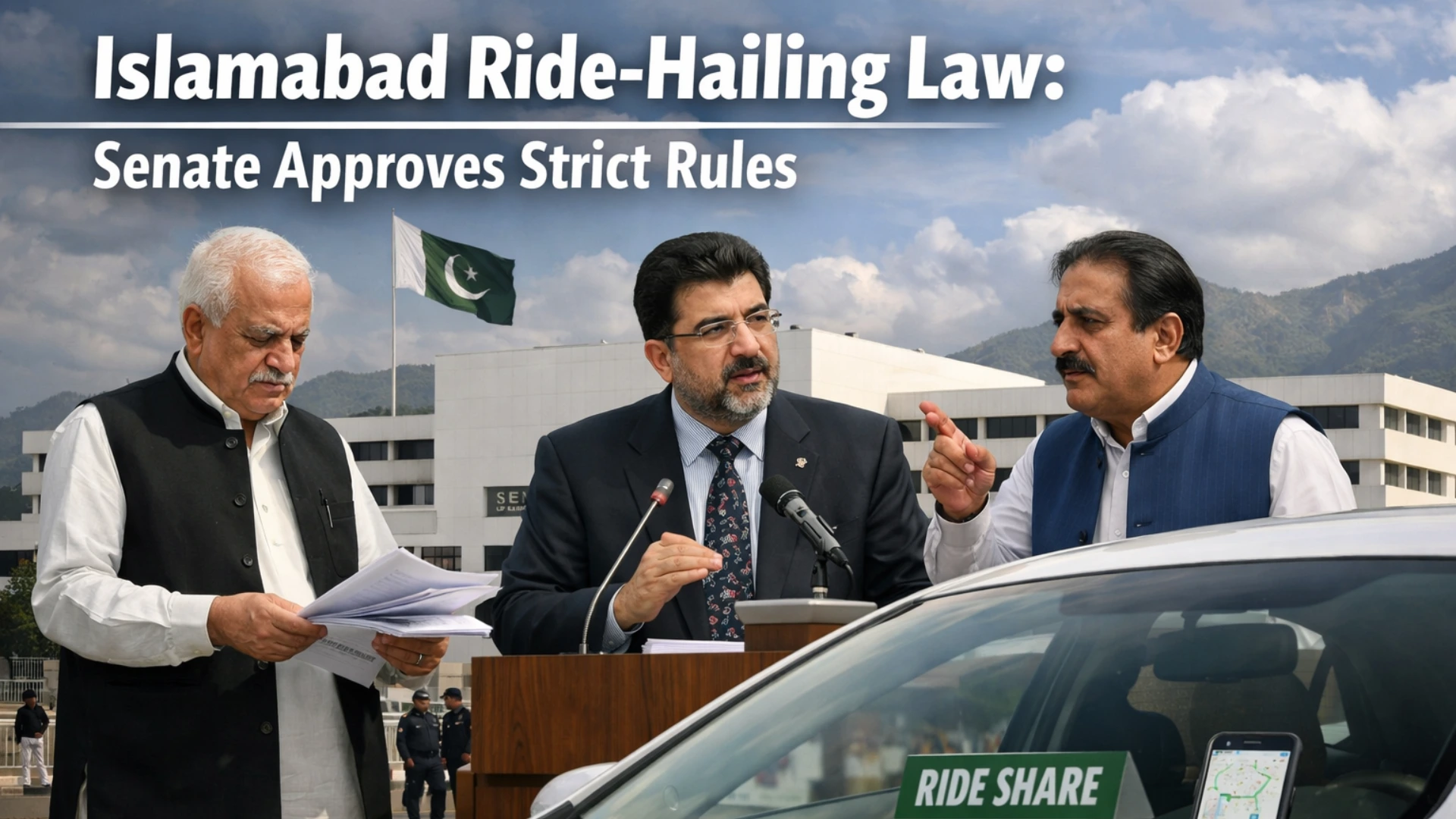
The Islamabad ride-hailing law marks a major shift in how online ride-hailing services operate in the capital. Approved by the Senate of Pakistan, this new legislation introduces a formal regulatory framework aimed at improving safety, accountability, and transparency within the rapidly growing ride-hailing sector in Islamabad.

For years, ride-hailing platforms expanded without a clear legal structure. The Islamabad ride-hailing law now fills that gap by setting strict requirements for companies, drivers, and vehicles operating in the city.
Overview of the Islamabad Ride-Hailing Law
The Islamabad ride-hailing law was approved to regulate online transportation services operating within the Islamabad Capital Territory. Under this law, no ride-hailing service can legally operate without official authorization from the designated regulatory authority.
According to Senate officials, the primary objective of the Islamabad ride-hailing law is to protect passengers, improve service standards, and bring digital transport platforms under proper administrative oversight.
Ride-Hailing Company Requirements Under the New Law
Mandatory Operational Certificate
Under the Islamabad ride-hailing law, all ride-hailing companies must obtain an operational certificate before offering services in the capital. Companies operating without approval will be considered illegal.

Data Sharing and Record Keeping
Ride-hailing platforms are now legally required to:
- Maintain complete records of registered drivers
- Keep updated vehicle documentation
- Provide operational data to authorities upon request
This provision of the Islamabad ride-hailing law ensures transparency and allows regulators to investigate complaints, safety concerns, or violations more effectively.
Driver Registration Rules in Islamabad
Compulsory Driver Registration
One of the most impactful parts of the Islamabad ride-hailing law is mandatory driver registration. Every driver must be officially registered with the designated authority.
Unregistered drivers will not be allowed to operate within the city limits.

Driver Eligibility Criteria
Under the new Islamabad ride-hailing law, drivers must:
- Hold a valid driving license
- Obtain a special ride-hailing permit
- Meet eligibility standards set by regulators
These measures aim to reduce unqualified drivers and improve passenger safety across the city.
Vehicle Requirements Under the Islamabad Ride-Hailing Law
Vehicle Registration and Fitness
The Islamabad ride-hailing law also introduces strict rules for vehicles used on ride-hailing platforms. Each vehicle must:
- Be properly registered
- Pass annual fitness inspections
- Meet safety and roadworthiness standards
Vehicles failing inspections will be barred from ride-hailing services until compliance is restored.

Why the Islamabad Ride-Hailing Law Was Needed
Addressing Safety Concerns
Before this legislation, ride-hailing services operated with minimal oversight. The Islamabad ride-hailing law directly addresses:
- Passenger safety risks
- Lack of driver accountability
- Poor vehicle maintenance standards
Bringing Order to a Growing Sector
With the rapid expansion of app-based transport, the absence of regulation created confusion and enforcement challenges. The Islamabad ride-hailing law establishes clear rules that benefit both consumers and service providers.
Impact on Passengers and Drivers
Benefits for Passengers
Passengers can expect:
- Safer rides
- Verified drivers
- Better complaint handling mechanisms
The Islamabad ride-hailing law gives commuters greater confidence when using online transport services.

What Drivers Should Prepare For
Drivers must ensure:
- Proper registration
- Valid permits and licenses
- Compliance with vehicle fitness requirements
While this may add administrative steps, it also professionalizes ride-hailing as a recognized occupation.
Accountability and Enforcement Measures
Authorities now have the legal power to:
- Penalize non-compliant companies
- Remove unregistered drivers
- Suspend services violating the Islamabad ride-hailing law
This enforcement mechanism ensures that regulations are not merely symbolic but actively implemented.

Conclusion
The Islamabad ride-hailing law is a landmark step toward regulating Pakistan’s digital transport ecosystem. By enforcing clear standards for companies, drivers, and vehicles, the Senate has laid the foundation for a safer and more accountable ride-hailing environment.
As the sector continues to grow, effective implementation of the Islamabad ride-hailing law will determine its long-term success. For passengers, drivers, and companies alike, compliance is no longer optional—it is the new standard.