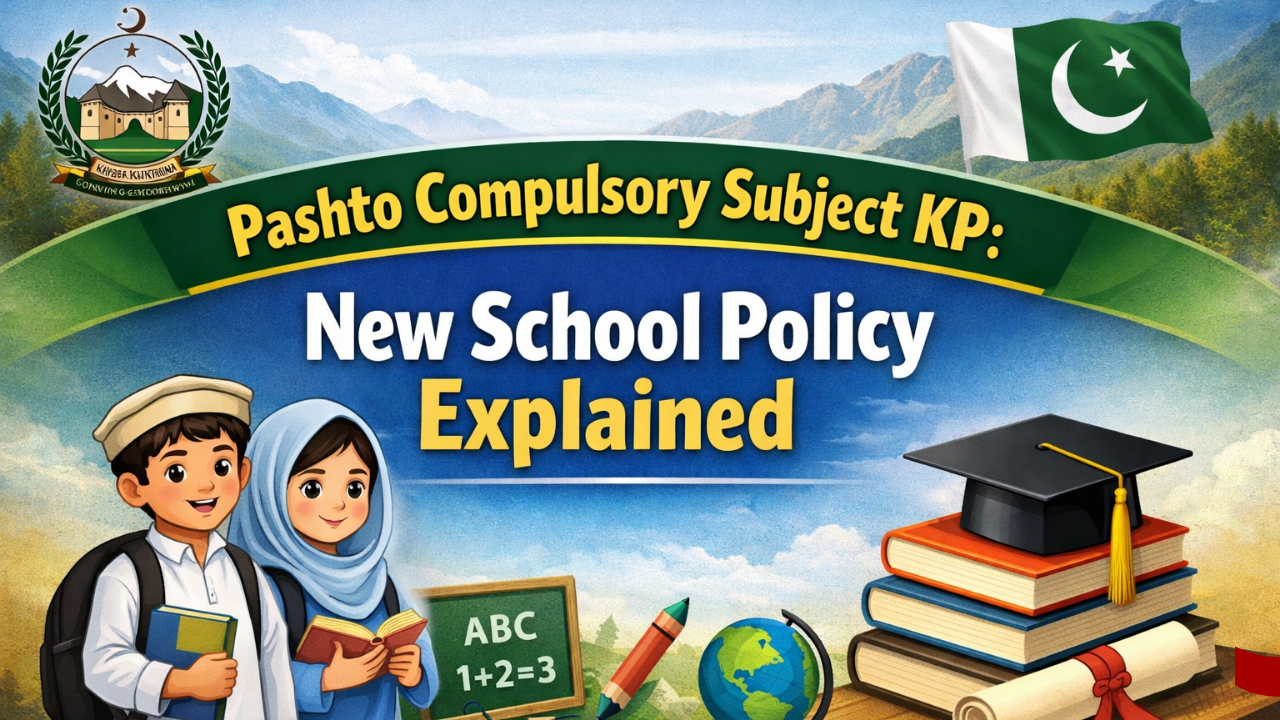
Pashto Compulsory Subject KP: Khyber Pakhtunkhwa (KP) has officially announced that Pashto will now be a compulsory subject in schools, marking a significant step in regional language education. The Office of the District Education Officer (Male), Nowshera, recently issued a directive ensuring that all government schools must teach Pashto up to the second year. This long-awaited policy reinforces the importance of preserving the local language and culture among students while aligning with the provincial education strategy.
Why Pashto is Now a Compulsory Subject in KP

The move to make Pashto a compulsory subject is rooted in KP’s commitment to promote regional languages in formal education. Authorities believe that learning Pashto not only strengthens cultural identity but also enhances communication skills for students within their communities.
Education officials emphasize that language education goes beyond communication; it fosters cognitive development, improves comprehension, and encourages students to appreciate their heritage. By making Pashto compulsory, KP aims to create a balanced curriculum that combines both academic excellence and cultural literacy.
Official Notice from the DEO’s Office
The District Education Officer (Male), Nowshera, issued a formal notice to all government schools, including high, middle, and elementary levels. The notice targeted:
- Principals and headmasters of government high schools (GHS) and middle schools (GMS)
- Sub-Divisional Education Officers (SDEOs) in Pabbi, Nowshera, and Jahangira
The directive highlighted earlier communications from the Elementary & Secondary Education Department, which emphasized province-wide enforcement of Pashto as a subject.

Key Instructions in the Notice
- Ensure Pashto is taught across all eligible classes up to the second year
- Monitor the quality of teaching and adherence to the curriculum
- Maintain records of Pashto classes and student performance
- Heads of institutions and concerned officials could face accountability for non-compliance
Impact on Schools and Teachers
Responsibilities of School Heads
School principals and headmasters are now tasked with:
- Integrating Pashto into lesson plans
- Coordinating with teachers for proper subject delivery
- Ensuring compliance with the provincial directive
- Reporting any challenges or deviations to the DEO’s office
Failure to implement the subject could result in administrative consequences for both school heads and relevant education officials.
Teachers’ Role in Implementation
Teachers will play a pivotal role in ensuring the effective teaching of Pashto. This includes:
- Following the prescribed curriculum
- Conducting regular assessments to track student progress
- Using interactive and culturally relevant teaching methods
- Promoting language fluency and comprehension among students
By involving both school administrators and teachers, KP aims to create a structured and accountable system for teaching Pashto.

Benefits of Making Pashto a Compulsory Subject
Strengthening Cultural Identity
Teaching Pashto in schools ensures that students remain connected to their cultural roots. It fosters pride in their heritage and helps preserve the linguistic legacy of KP.
Cognitive and Academic Advantages
Learning a regional language has multiple educational benefits:
- Improves memory and comprehension skills
- Enhances cognitive development
- Encourages multilingualism, which is linked to better problem-solving skills
Social and Community Impact
Students fluent in Pashto can better communicate within local communities, participate in cultural events, and contribute to regional initiatives. This also promotes unity and social cohesion within KP.
Challenges in Implementation
Despite its benefits, implementing Pashto as a compulsory subject presents some challenges:

- Lack of trained Pashto teachers in some areas
- Limited teaching resources and textbooks
- Resistance from schools struggling to adapt curriculum changes
To overcome these challenges, the government may need to invest in teacher training programs, resource development, and monitoring systems.
Previous Policies and Current Enforcement
Pashto has been part of the curriculum in KP schools for years, but enforcement was often inconsistent. This new directive signals stricter adherence to existing policies, ensuring all students receive proper instruction.
By emphasizing accountability, the DEO’s office aims to:
- Reduce gaps in language education
- Standardize Pashto teaching across schools
- Strengthen the province’s commitment to regional language promotion
What This Means for Students
Students in government schools will now regularly study Pashto up to the second year. Benefits for students include:
- Improved literacy in their mother tongue
- Better understanding of cultural history and literature
- Increased opportunities for academic and career growth in regional contexts
Parents and guardians are encouraged to support children in learning Pashto, as active engagement at home can complement classroom learning.
FAQs About Pashto Compulsory Subject KP
Who must follow this directive?
All government high and middle schools in KP are required to teach Pashto up to the second year.
What happens if schools don’t comply?
School heads and relevant education officials may face administrative action for non-compliance.
Are resources available for Pashto learning?
Yes, the government plans to provide textbooks and teaching aids, although availability may vary across districts.

Is this applicable to private schools?
Currently, this policy targets government schools only, but private institutions may adopt similar programs voluntarily.
Conclusion
The announcement to make Pashto a compulsory subject in KP schools reflects a significant commitment to preserving regional language and culture. By holding schools and officials accountable, the government aims to ensure effective implementation and promote educational excellence.
This policy not only benefits students academically but also strengthens their cultural identity, social cohesion, and language skills. As KP schools adapt to this directive, Pashto education is poised to become an integral part of the province’s academic landscape.